Seeing Singapore from the top of a double-decker bus
When I have some free time and I am in a good mood, I sometimes take a bus with no urgent reason to do so. It is one of the cheapest ways to look at Singapore.
Walking is slower and considerably sweatier. A taxi gets you there too efficiently. The MRT is excellent, but much of the view is a tunnel. A bus gives the city time to develop a plot.
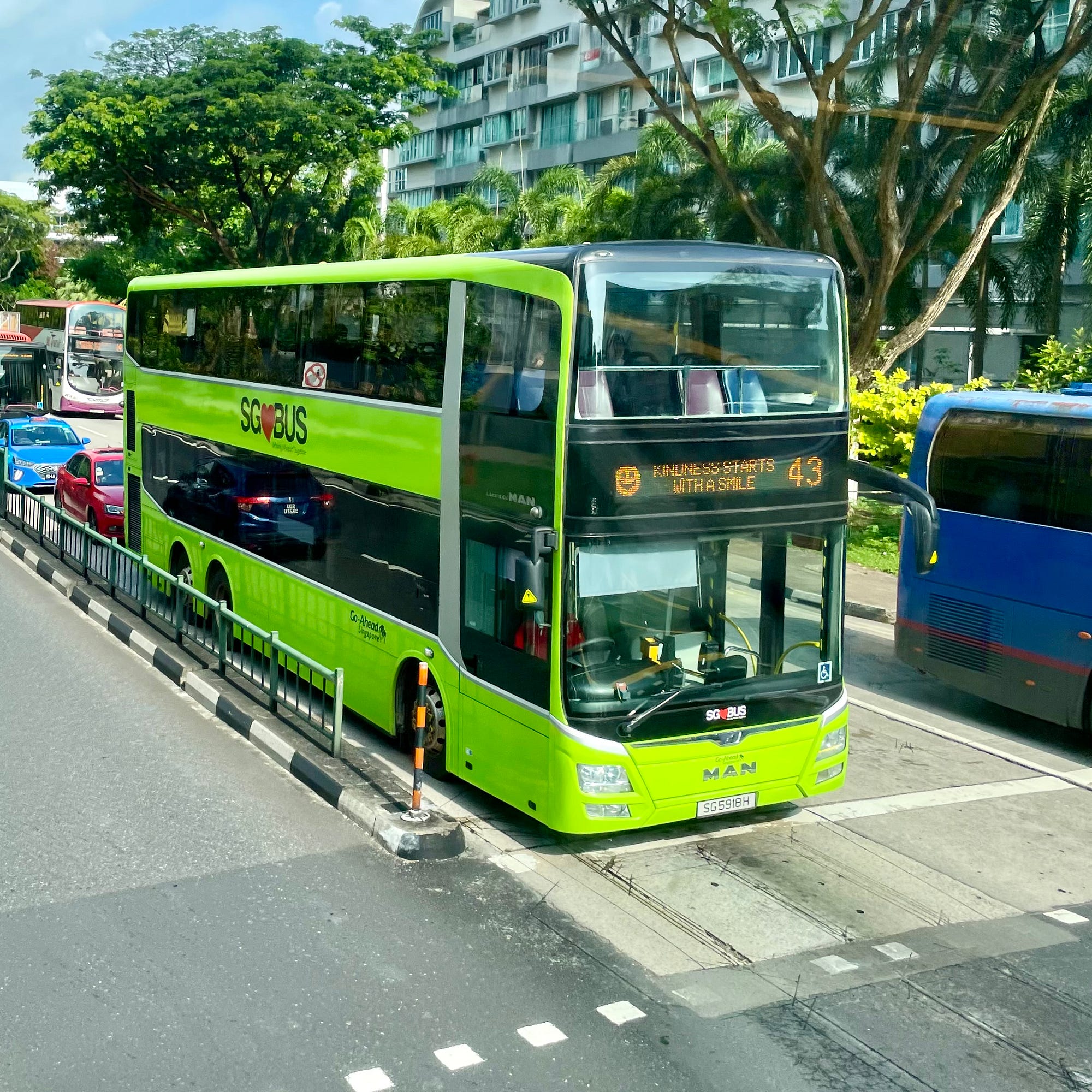
I especially love double-deckers. They are small cinemas, except that the screen is a huge window and everything behind it is real. The best seat is the front row upstairs. It feels like a window seat on an aeroplane, only you are not above the clouds — you are level with tree branches, flyovers and the upper floors of shophouses.
How Singapore got double-decker buses
Singapore’s modern double-decker story began on 13 June 1977. Singapore Bus Service put twenty buses on trial, and the first one went to Service 86. At launch, seven buses ran between Tampines Way and Shenton Way for a flat fare of 40 cents.
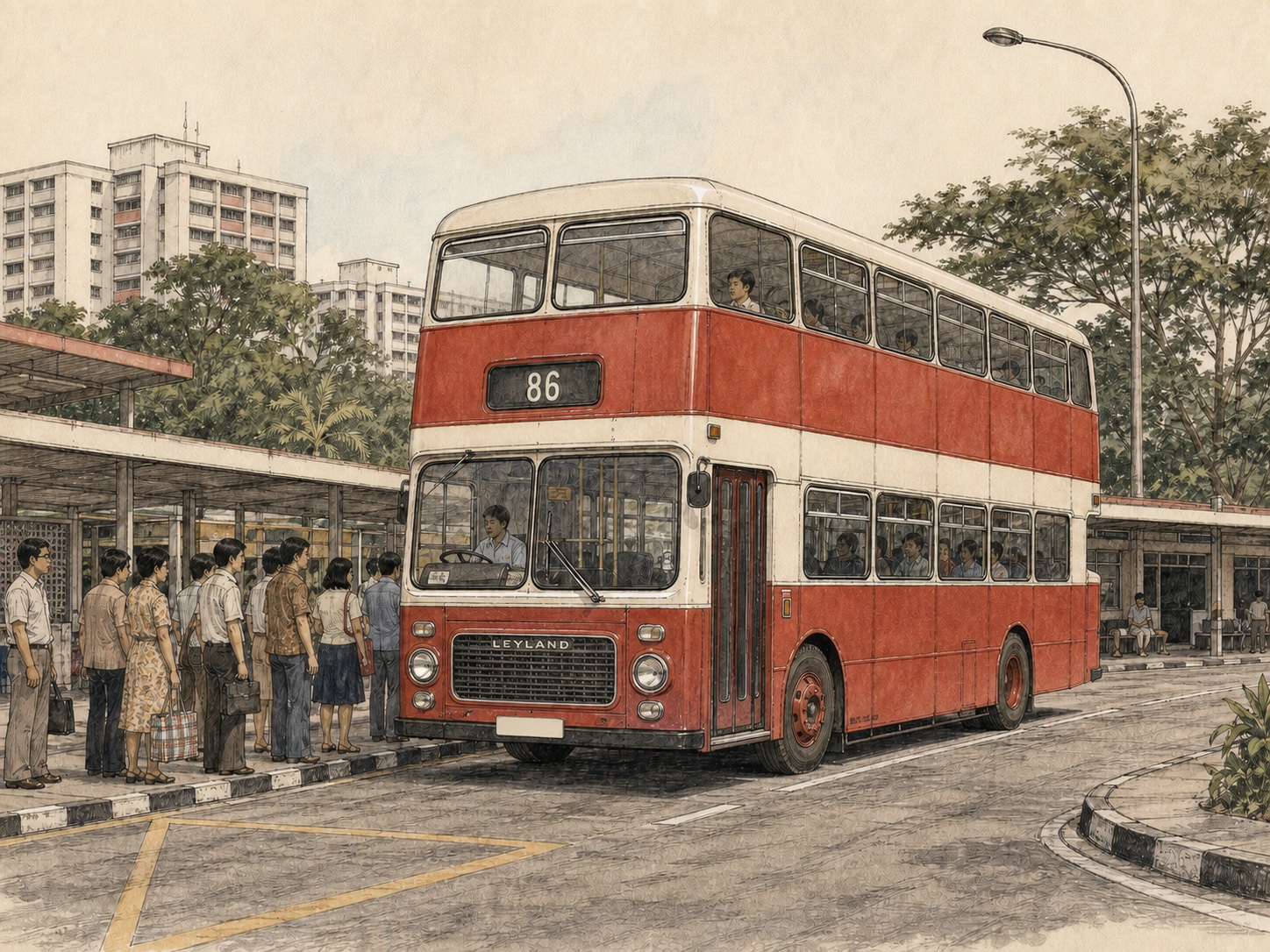
The route number still exists, although it now goes somewhere else. This is very Singaporean: the bus survives, the route survives, and almost everything around them has been reorganised.
The basic idea has also survived. In a city where land is scarce, one sensible way to carry more people without making the vehicle much longer is to add another floor. It is public transport applying the same logic as an HDB block.
Why they can operate here
A double-decker cannot simply be sent down any road that looks promising. Its route needs enough vertical clearance, suitable turns, properly designed stops and interchanges, and enough passenger demand to justify the extra capacity. Singapore even maintains an official list of roads and structures with height limits. Somewhere behind my pleasant ride, somebody has checked the bridges.
The wider system helps. Singapore has more than 9,500 lane-kilometres of roads and expressways, and buses receive priority on parts of that network. Stops, bus bays and interchanges are planned as pieces of the same system rather than places where a bus happens to pull over.
The buses themselves have been adjusted too. Newer three-door double-deckers have a second staircase and another exit at the rear. People can go up one way and come down the other, which reduces the familiar end-of-ride ceremony in which half the upper deck suddenly remembers it is getting off.
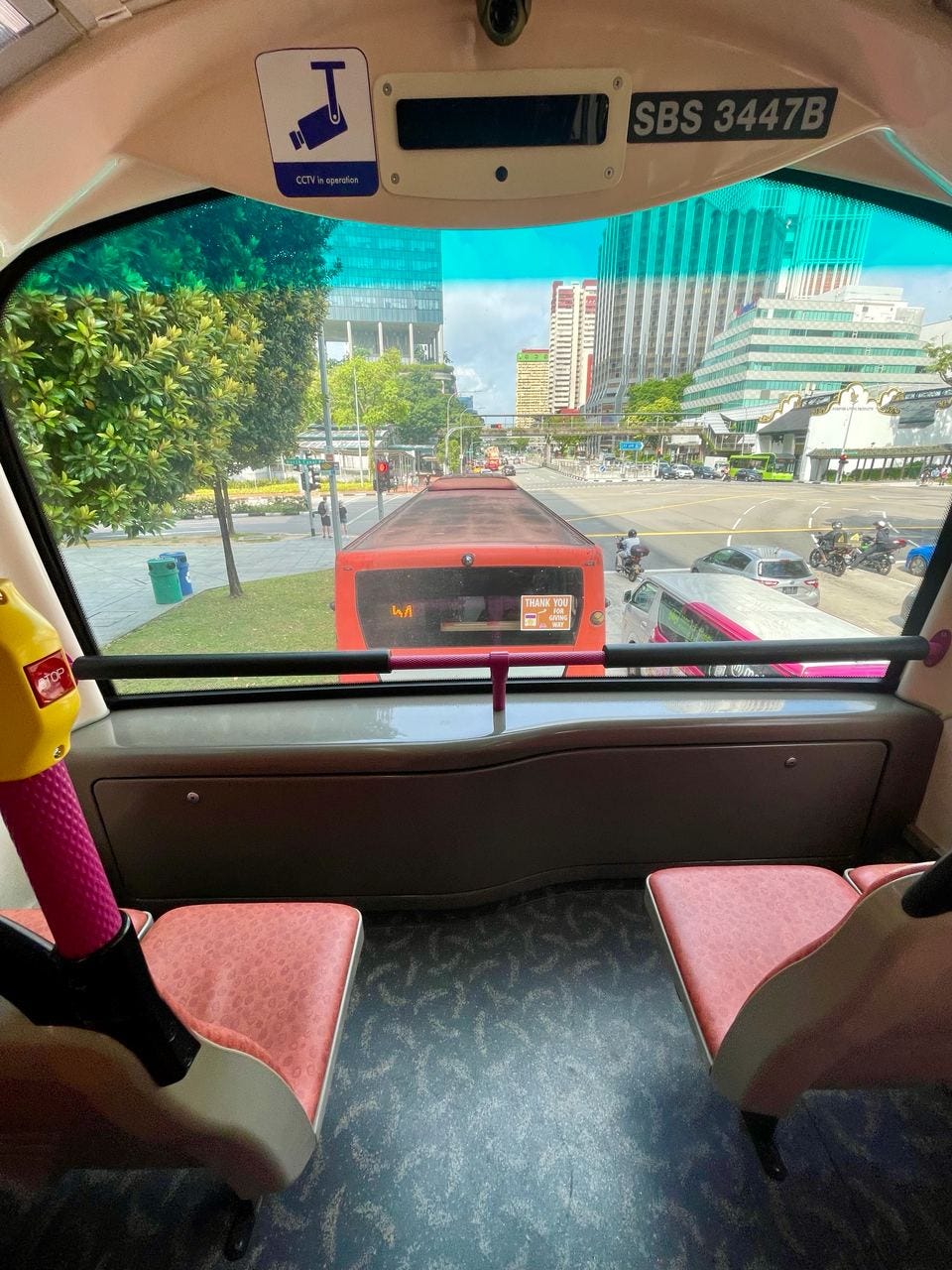
What you notice from upstairs
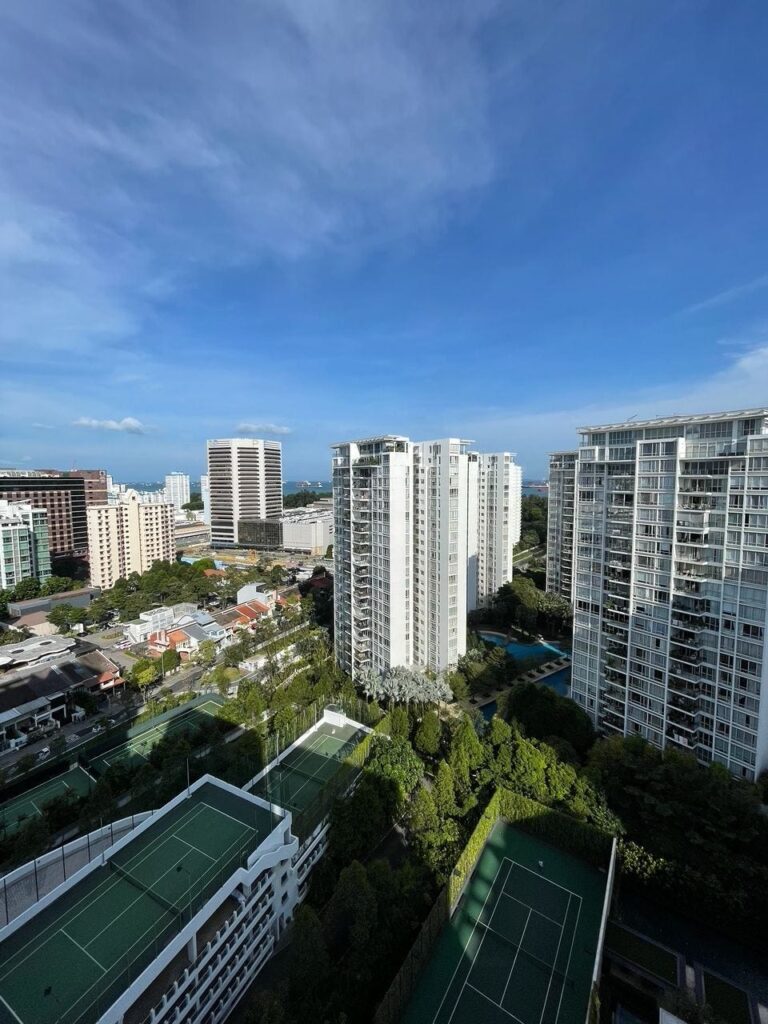
From pavement level, Singapore is mostly entrances, signs and people trying to pass you. From the upper deck, the proportions change. You see how thick the roadside greenery is. You notice tiled shophouse roofs that are almost invisible from below, old apartment corridors, school fields, rooftop gardens and the surprising number of buildings hiding behind trees.
Familiar roads become unfamiliar because the camera has moved three metres upwards. Even an ordinary junction starts to look like a small piece of urban planning rather than somewhere you are waiting for the light to change.
Three routes worth trying
Bus 30 is the most cinematic option. It passes through the Marina Coastal Expressway tunnel — about 20 metres below the sea — and then returns to daylight with the city skyline in front of you. Even LTA’s own scenic-route guide recommends the front row on the top deck.
Bus 97 is a compact tour of the Singapore that appears on postcards and annual reports: Gardens by the Bay, Marina Bay Sands, the Singapore Flyer, Shenton Way, Keppel and then the western side of the island.
Bus 103 has a quieter trick. It crosses Yishun Dam with water on both sides, then continues towards Seletar Aerospace Park. For a few minutes, the road feels less like Singapore and more like a scene in which the animator has forgotten to draw the rest of the land.
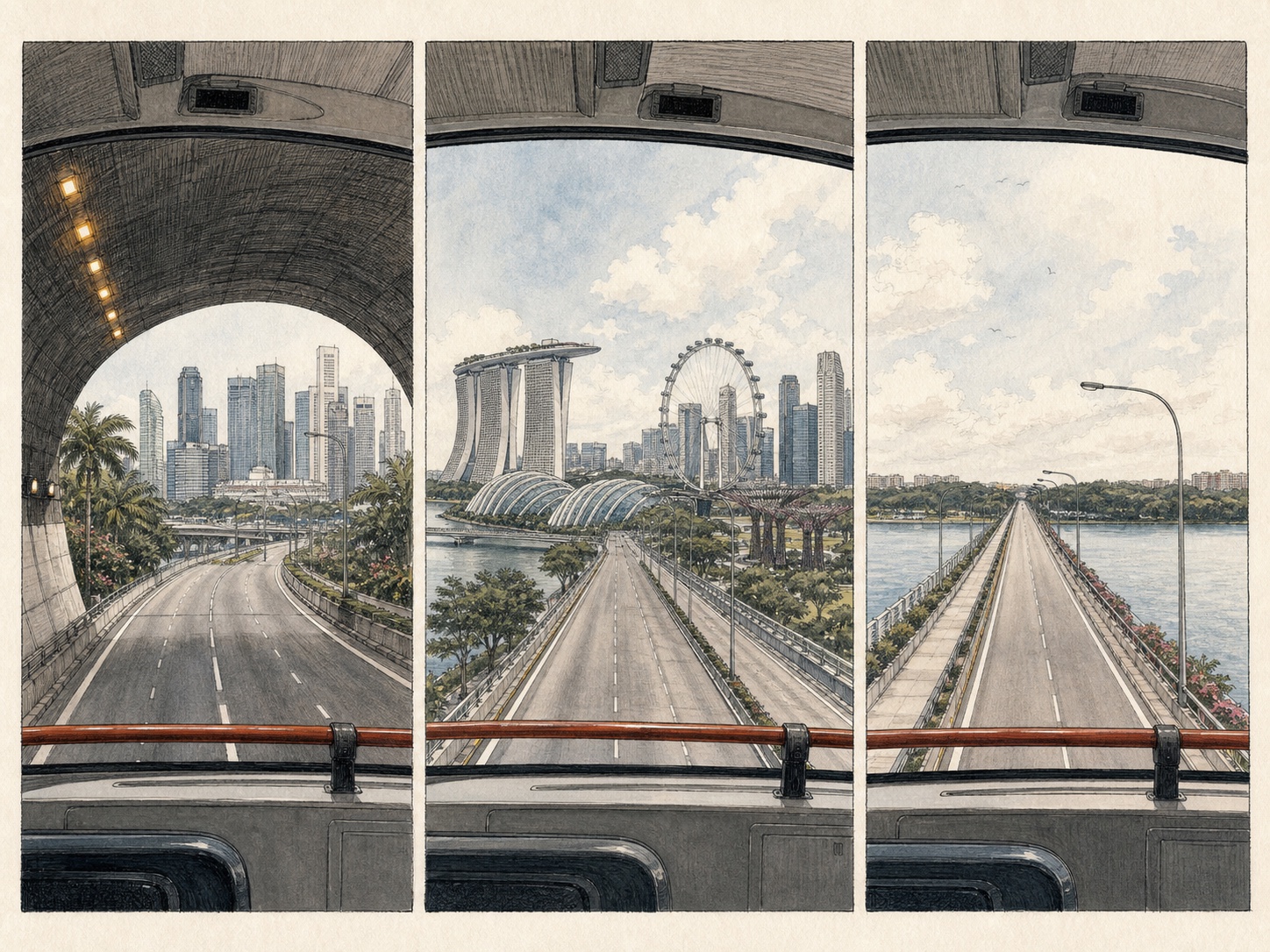
Bus models can change between departures, so a double-decker is not guaranteed every time. My method is highly technical: I wait until I can see one.
A small upper-deck rule
Under the public-transport Conditions of Carriage, you are not allowed to stand on the upper deck or sit on the stairs. This is sensible, although it means the front-row experience comes with a small logistical problem: at some point you must leave it.
I try to remember my stop early and go downstairs when it is safe. Missing a stop because the view was good is not a serious problem in Singapore. It just gives the film another scene.
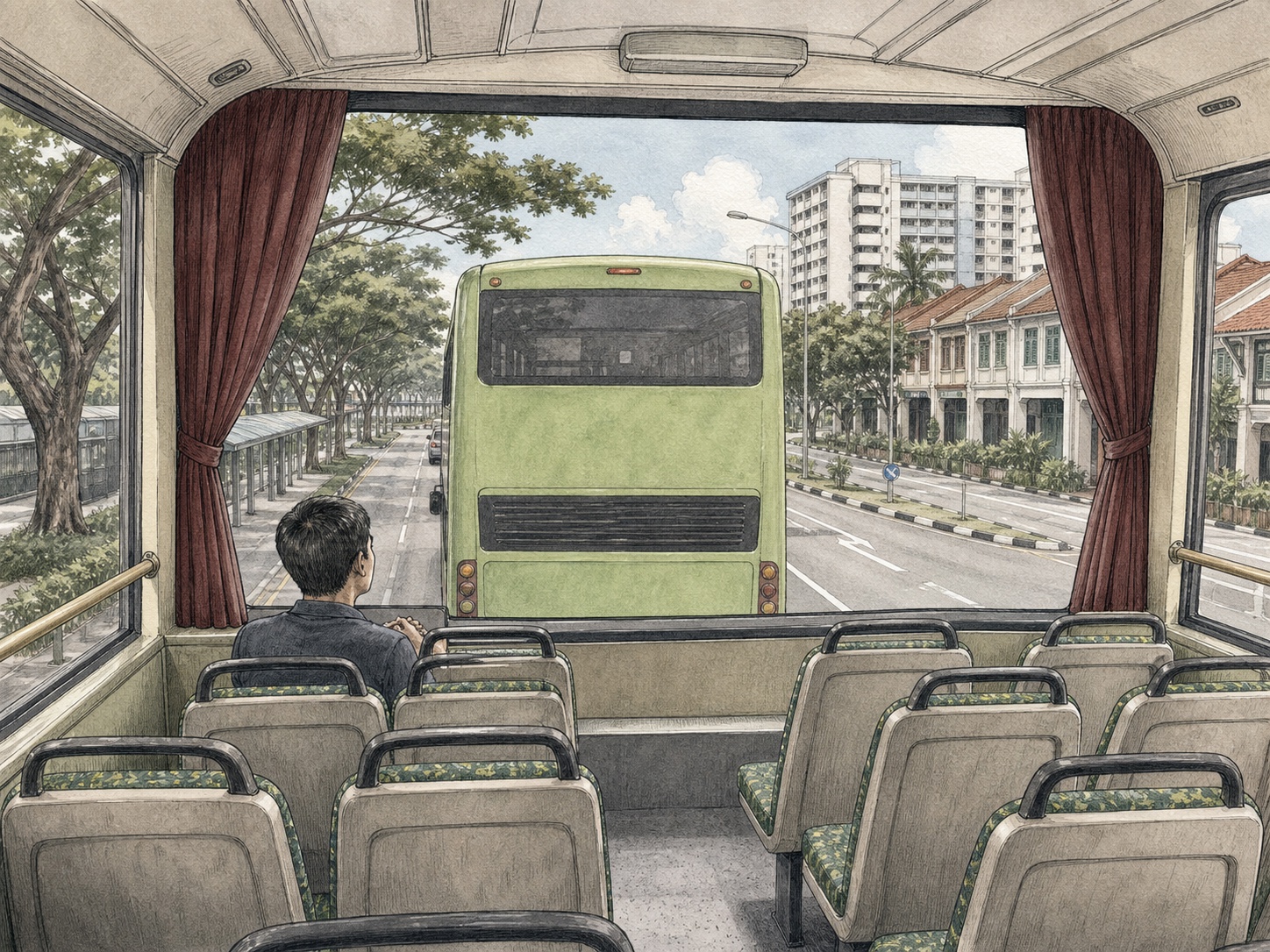
Even after years in Singapore, the city looks different from that seat. The streets are the same; only the camera angle has changed. Some days the film is Marina Bay. Some days it is rain, traffic and the back of Bus 43. The ticket price is the same.
A story of your own?
Loading responses sets a necessary browser cookie to prevent duplicate votes. You can change or remove your answer. Votes are informal, not a representative survey. How responses work · Original discussion ↗