Century eggs
Century eggs have one of the worst names in food. Show one to somebody who has never seen it, and they may assume that it is rotten — or that somebody forgot it in a cupboard during the previous century.
Neither is true. A century egg is preserved, not spoiled, and it is usually only a few weeks old. The name is by far the oldest part.
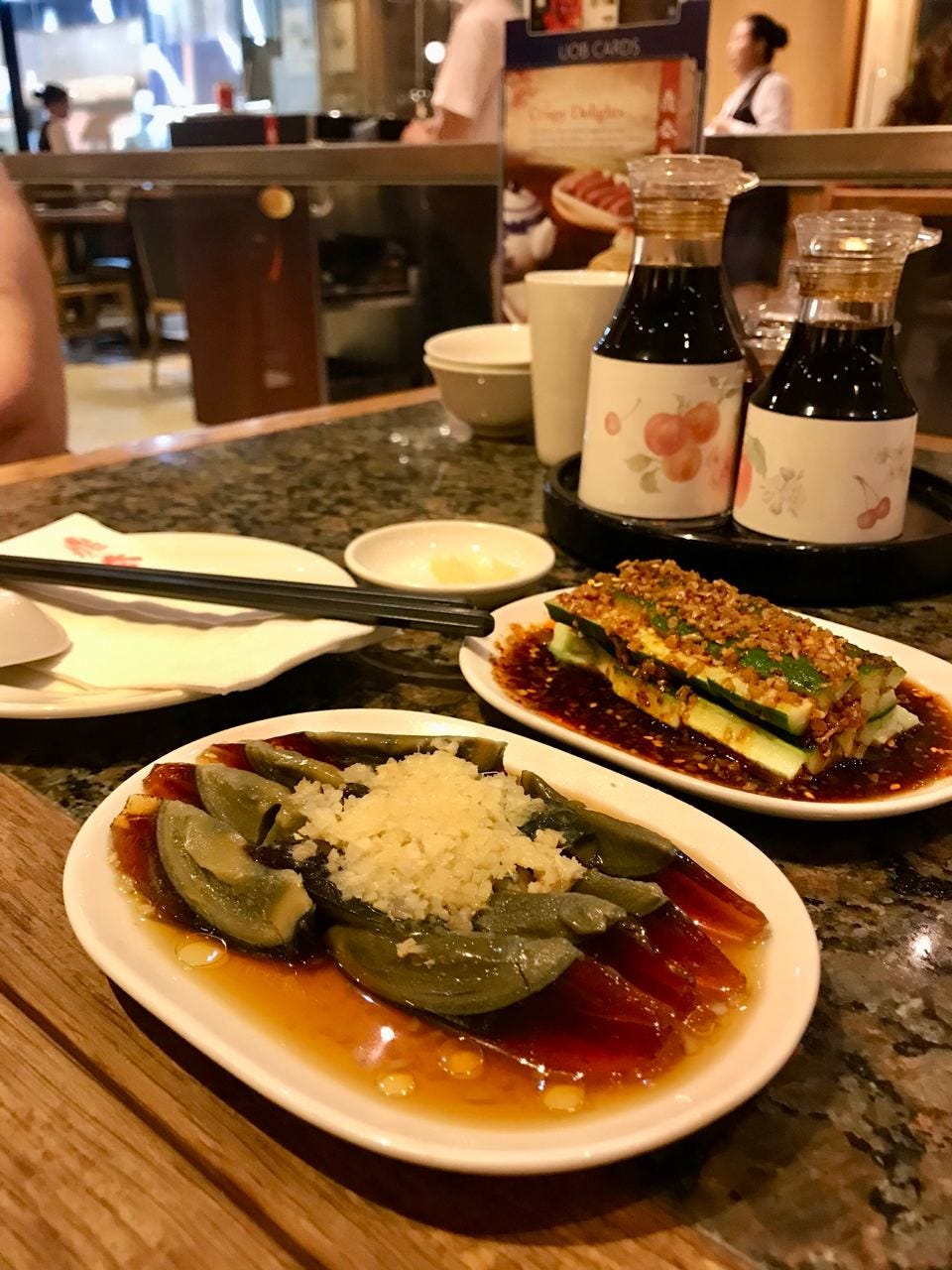
I really love Chinese century eggs, or pidan, and I almost always order them at Din Tai Fung. People expect a terrible smell, but I do not get it. To me, an ordinary hard-boiled egg can smell stronger. At the restaurant, pidan arrives sliced, splashed with vinegar and covered with fine ginger, so it smells surprisingly fresh.
The taste is mild and savoury. The dark white is a little springy, while the green-grey yolk is soft and creamy. It tastes much closer to a normal egg than it looks. The texture is the fun part.
So how do they make it?
Fresh duck eggs are left for a few weeks in a salty alkaline mixture. Traditional recipes use clay, ash, lime and salt; modern producers use a prepared solution. The mixture slowly passes through the shell and changes the egg inside.
That is why the white turns dark, translucent and jelly-like, and the yolk becomes creamy and green-grey. Nothing is quietly rotting. It is simply a different way of preserving an egg — much like salting or pickling, only with more dramatic results.
And how do you eat it?
Vinegar and ginger are the easiest place to start. Pidan is also eaten with congee or tofu. At home, I am perfectly happy to slice one and add mayonnaise for breakfast. This may not be the traditional Chinese serving suggestion, but it works.
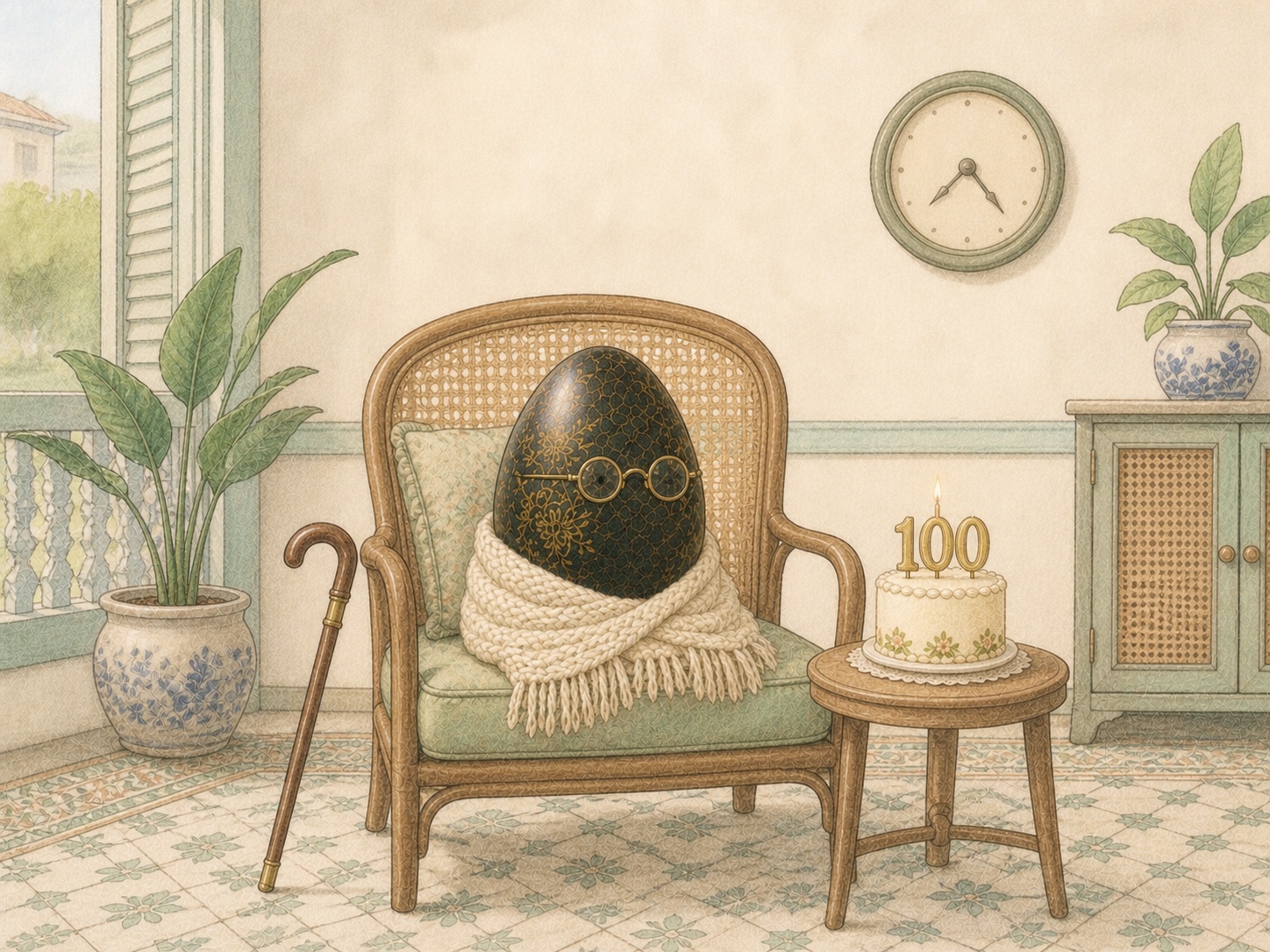
The egg is not a century old. It is just ready for breakfast.
A story of your own?
Loading responses sets a necessary browser cookie to prevent duplicate votes. You can change or remove your answer. Votes are informal, not a representative survey. How responses work · Original discussion ↗